One of the ways I like to test my own advice is by thru-hiking and these are the basics that I pack…
Thru-hiking is basically a multi-day, end-to-end hike. Thru-hikers tend to have all of their gear with them so that they may eat and sleep on the trail. Occasionally they hop off the trail to explore nearby towns or to re-stock supplies.
When planning for a thru-hike, my main goal is for everything to make sense, to be easily accessible, and easily packable. To achieve this, I have two main strategies:
1. Complexes: When preparing for a thru-hike, like many other hikers, I divide my needs based on these things. And I pack these things separately, like different rooms in a house:
- Hygiene
- First Aid
- Other Emergencies
- Food
- Clothing
- Shelter
- Hiking
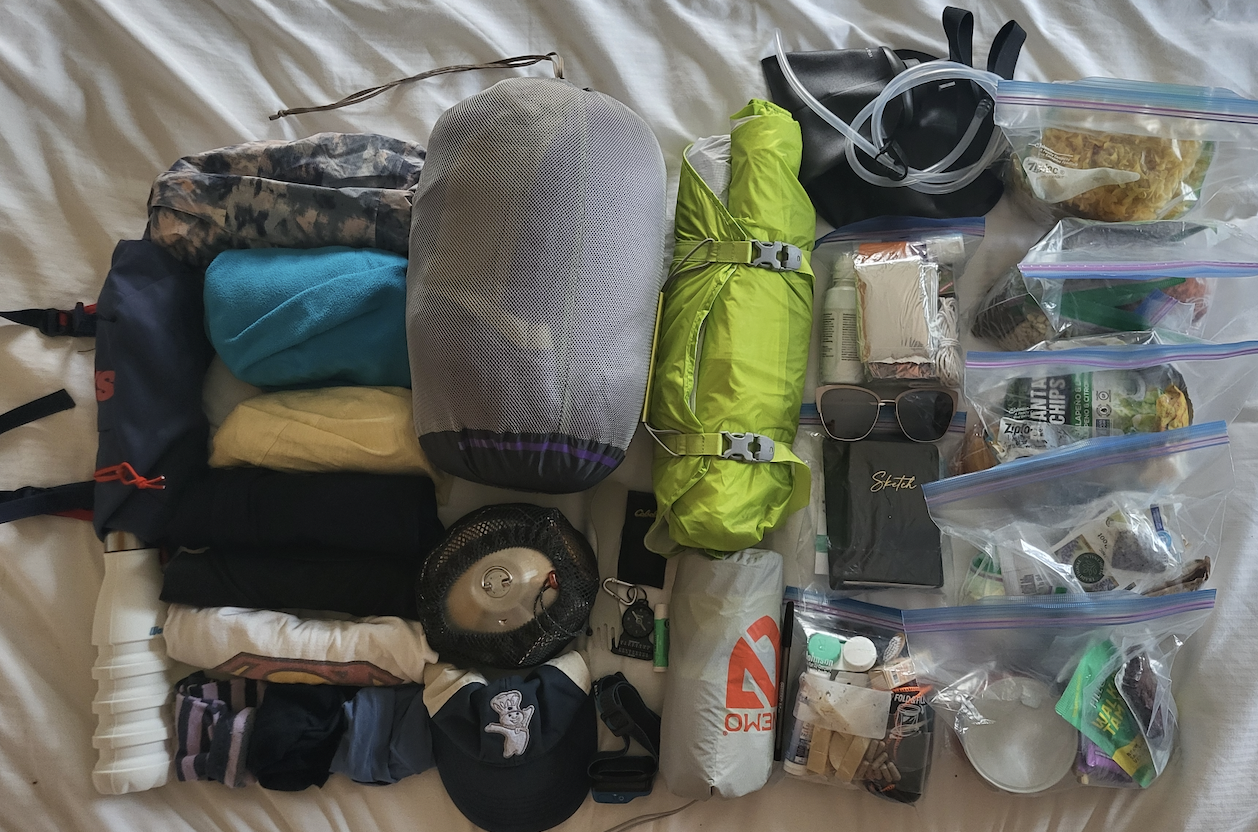
2. Ultralight: “Ultralight” backpacking tends to mean that your pack (all of your stuff except the clothes on your back) weighs anywhere between 5-20lbs. Some people get really into it and shave off unused bits of canvas, snap their toothbrushes in half to discard everything but the bristles, and no tent - just a tarp. This is not exactly for me.
With average equipment (not expensive ultralight stuff) and all of my food, my pack weighs ~35lbs. However I do take these steps to lighten my load:
- Weigh ALL my items (in grams)
- Record weight on a spreadsheet & calculate totals
- Brainstorm lighter options
- Testing gear & meals beforehand
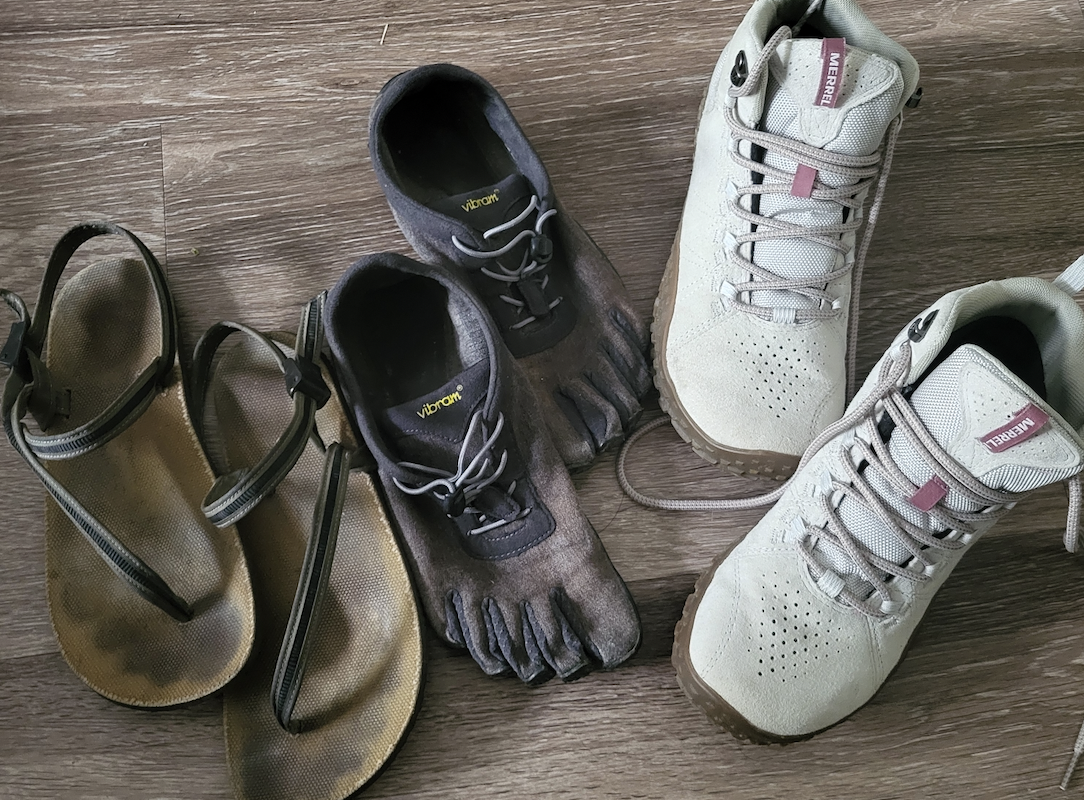
It’s incredible how much room for improvement you make for yourself just by testing gear out on a long walk and seeing those numbers add up on a spreadsheet. Like, do I really need THREE pairs of shoes? Or can I get away with 1…
Also, what you need for your hike will change over time, depending on various factors including:
- Location (is water nearby? is there no water nearby? high or low altitude?)
- Duration (pack more food or less food?)
- Season (clothing for fall vs summer?)
- Terrain (running shoes or hiking boots?) and more
In the next series of posts, you’ll find more details on how I arrange my items into complexes and aim to be ultralight. I’m still learning every day. so if you decide to thru-hike, make sure to adapt these strategies to your own needs!
Thru-Hiking Part I: Hygiene Complex
The Hygiene Complex is for my personal cleanliness routine…
Because I use my hygiene multiple times each day, it goes at the very top of my pack.
I selected soap and insect repellent made bylocal, conscious crafters, like twigs ‘n dirt for their good quality and gentler impact on nature (you can find their items on my Etsy Store!). And I tried to limit my waste.
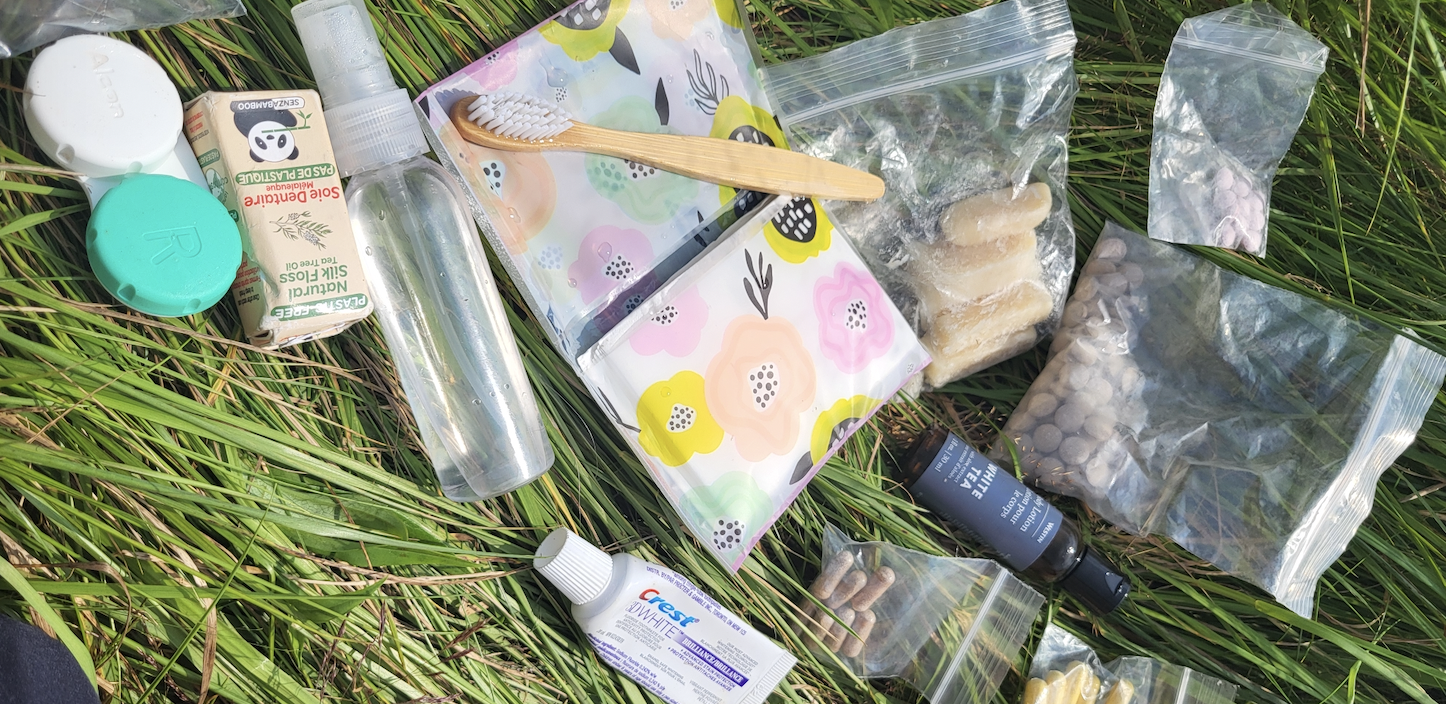
Equipment
- Bamboo Toothbrush
- Toothpaste Tablets
- Silk Toothfloss - its texture cleans so well!
- Tissue Pack
- Insect Repellent - Handmade, friendlier than DDT, smells amazing.
- Natural Soap - Goats 'n Oats by twigs 'n dirt. It worked so well and doubled as detergent.
- 6” x 9” Microfibre Towel
- Daily Vitamins
- Alcohol Spray Bottle
- Lightweight Comb - I really appreciated it with the humidity.
- Heat Rash Cream
I also kept space for things that are specific to my extra needs. For example, you might need orthodontic support or menstrual pads.
Finally, I counted out smaller pieces (i.e. toothpaste tabs, soap, daily vitamins) and packed the exact amount I needed into resuable, mini zipper bags. These were packed it all together in a medium FREEZER zipper bag (freezer = durable!)
Thru-Hiking II: First Aid Complex
By going on a long thru-hike I naturally open myself up to risks I don’t face daily.
The First Aid Complex helps with things that are self-treatable (i.e. headaches, blisters). And even though I’m often tempted to over pack, I try to stick to items I’d realistically use.
For greater emergencies, I make sure to pack clothes that can double as gauze or a sling. And I bring my phone (to check my location) with an emergency battery pack just in case.
Because First Aid items are IMPORTANT, I keep them as dry/in tact as possible - otherwise they might spoil. So I sometimes store them with rice to keep moisture away or keep them in their original blister packs (but cut down the pack into smaller pieces).
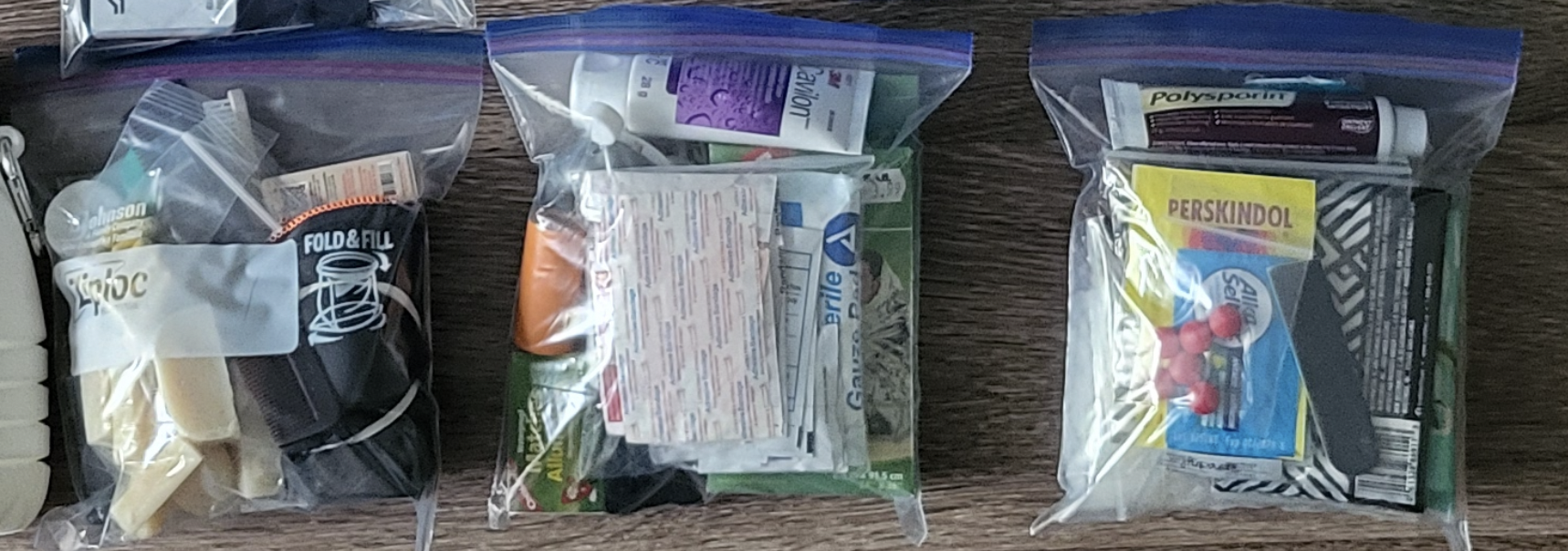
For my Newfoundland Thru-Hike, I went out and got a mini first aid kid to start. Then I took out a few things and added a few things.
Equipment
- Acetaminophen
- Ibuprofen - packed in with rice to ward off moisture.
- Allergy Medication - I cut down the blister pack it came in.
- Polysporin
- Sunscreen Stick
- Fabric Bandaids
- Alcohol wipes
- Heat Rash Cream - I moved this to my daily-use hygiene kit.
Deciding What to Pack
With the first aid complex, I DO NOT use weight reduce an item. Instead, I ask myself:
- "If I needed this (i.e. for a headache or soreness) how many would I need?"
- "Will this really be able to help me (i.e. is the bandaid adhesive fresh or old?)"
- "How many things can I use this for (i.e. gauze takes up space but it's versatile)?"
For this hike, the most common first-aid issue I got was blisters. So I’m so glad I ADDED more good-quality bandaids and more alcohol wipes! It sounds like nothing, but a gnarly blister festering in my moist boot nearly ruined my hike.
And I packed all of this into a medium-sized FREEZER zipper back (freezer = durable).
Thru-Hiking III: Other Emergency Complex
This complex helps with immediate issues that are NOT health related - so I can keep hiking safely OR to tide me over until I can exit the trail.
Equipment
For a hike of the East Coast Trail in August, here’s what I packed:
- Mini roll of duct tape
- Plastic bags (two)
- Waterproof matches (in addition to the lighter in my food complex)
- Small tissue pack
- Re-chargable battery pack
- Headlamp
- Combination pocket knife
- Multi-purpose Foil Rescue Blanket
- Rope (2m)
- Whistle
- Compass - thankfully I practiced how to use this + a hardcopy map because it works so differently than location services!
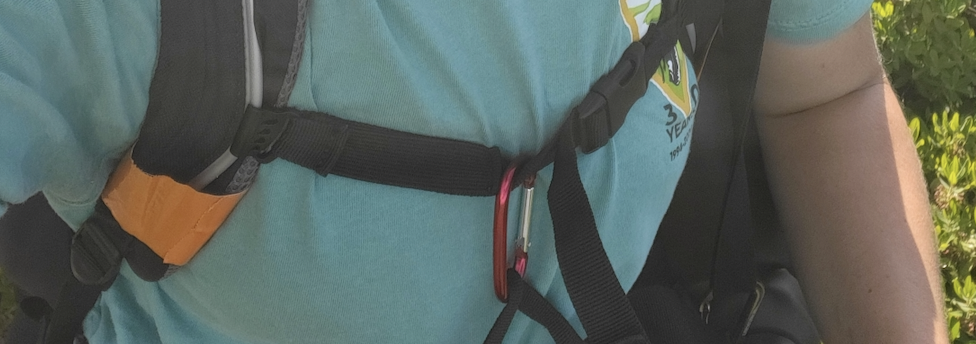
- Carabiner (just one)
Deciding What to Pack
For this complex, I weigh each item and asked myself these questions:
- "What would I need if my [tent, map, stove, shoes] fail(s)?"
- "Can I get this in a smaller/lighter size? (i.e. big vs tiny duct tape rolls)"
- "How many things can I use this for? (i.e. duct tape for mending clothes AND tent)"
And as always, for more complex emergencies I check my location often and bring an emergency battery pack in case I needed to call for help.
Tips
Of all these items, the duct tape was the most handy. It reinforced my pack and my Vibrams when I wore them out!
The next most useful items were the plastic bags; I wore them like socks to keep my feet dry in the wettest parts of the trail. I’d recommend also investing in excellent quality matches and adding to this water purification tablets.